
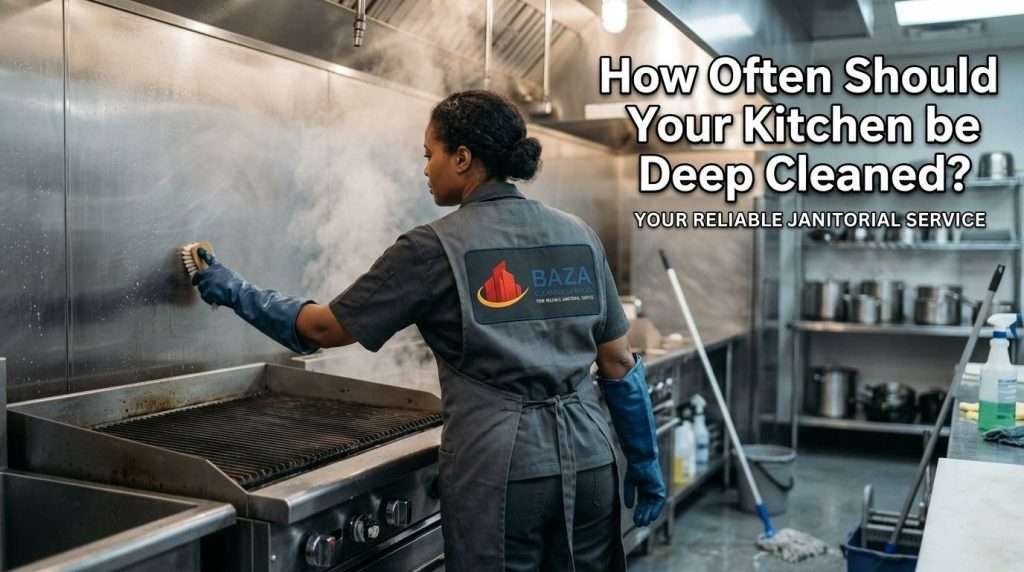
A restaurant kitchen should be deep cleaned every 3 to 6 months to maintain health code compliance and prevent fire hazards. Daily sanitizing is required for food contact surfaces. However, a comprehensive deep clean must be scheduled quarterly or semi-annually. This detailed process includes cleaning hoods, exhaust systems, and the hidden spaces behind heavy equipment. High-volume establishments, such as busy burger joints or 24-hour diners, frequently require professional deep cleaning on a strict 30-day to 90-day cycle.
As food service operators across the Birmingham metropolitan area know, keeping a back-of-house area spotless involves many factors. Ultimately, it is about much more than just passing your Jefferson County Department of Health inspection. Therefore, routine professional sanitation should be viewed as a fundamental pillar of operational safety, food quality, and fire prevention.
Why Restaurant Kitchen Deep Cleaning is Critical
A standard daily wipe-down keeps pests away. Furthermore, it makes the line look presentable for the next shift. However, daily surface wiping does not touch the real danger zones. Over weeks and months, atomized grease settles into areas that your kitchen staff simply cannot reach or see.
The Difference Between Daily Cleaning and Deep Cleaning
To understand why a professional schedule is non-negotiable, we must look at the structural differences between daily maintenance and specialized deep sanitation.
- Daily Operational Cleaning: This routine is performed by your line cooks, dishwashers, and closers. For example, it includes sweeping and mopping the line, wiping down prep tables with sanitizer, emptying trash cans, washing line inserts, and scraping flat tops.
- Deep Cleaning: This is a technical, highly intensive process typically executed by specialized janitorial professionals. Consequently, it involves pulling heavy equipment away from walls, pressure washing floors, degreasing the entire length of the exhaust plenum, dismantling burners, and sanitizing walk-in cooling coils.
Fire Prevention and Hood Exhaust Safety
According to the National Fire Protection Association (NFPA), nearly 30% of all restaurant fires are caused by cooking equipment. In addition, these situations are often exacerbated by grease buildup in the exhaust system. When your staff cooks, vaporized grease travels up through the hood filters. Next, it enters the ductwork. If this grease accumulates, it transforms the entire exhaust line into a highly flammable fuse. As a result, a single flare-up on the grill can ignite the ductwork and quickly carry flames through the building structure.
Health Code Compliance and Foodborne Illness
The Jefferson County Department of Health enforces strict regulations regarding food service sanitation. Accumulated grime, old food particles trapped beneath refrigeration units, and standing grease in floor drains are primary breeding grounds for dangerous pathogens. Specifically, these environments foster Salmonella, E. coli, and Listeria. Deep cleaning ensures that biofilm—a stubborn, microscopic layer of bacteria that resists everyday wiping—is completely broken down. Therefore, professionals utilize commercial-grade chemical agents and high-temperature pressure washing to eliminate these hazards.
The Recommended Restaurant Kitchen Cleaning Schedule
To help you manage your operations smoothly without disrupting your service hours, it is best to segment your maintenance tasks into a tiered schedule. This breakdown outlines exactly what needs to be tackled, and when, to ensure your back-of-house stays fully compliant and efficient.
Daily Tasks (End-of-Shift Routine)
These tasks must be executed by your in-house staff at the end of every business day to maintain basic hygiene standards.
- Food Contact Surfaces: First, wash, rinse, and sanitize all prep tables, cutting boards, and line inserts.
- Cooking Equipment: Next, clean flat-top grills, charbroilers, and burners. Be sure to empty and wipe down crumb trays daily.
- Floor Management: Similarly, sweep the entire kitchen floor. Pull line mats out to scrub them separately, and mop floors with a commercial degreaser dissolved in hot water.
- Dishwashing Area: Finally, clean and drain the dish machine. Clear the scrap screens and sanitize the clean-dish landing tables.
Weekly Deep Cleaning Tasks
These tasks require slightly more time. Usually, they are rotated among staff members during slower preparation shifts or Sunday night closures.
- Ovens and Combis: Clean interior walls, racks, and glass doors using heavy-duty oven cleaner.
- Deep Fryers: Boil out the fryers completely. First, drain the old oil, scrape out the carbon crust from the bottom, and fill with water. Then, add a boil-out chemical, heat the mixture, and rinse thoroughly before adding fresh oil.
- Sinks and Faucets: Delime all hand sinks, three-compartment sinks, and prep sinks to prevent scale buildup.
- Floor Drains: Flush all floor drains with an enzyme cleaner or heavy degreaser. Consequently, this step prevents fruit fly infestations and unpleasant odors.
Monthly Maintenance Checkpoints
Monthly cleaning targets areas that house hidden grease and bacteria. However, these zones do not require daily disassembly.
- Refrigeration Units: vacuum dust and grease off the condenser coils of reach-in coolers and walk-in boxes. Additionally, clean and sanitize the rubber door gaskets to ensure a tight seal.
- Ice Machines: Sanitize the interior bin of the ice machine to prevent the growth of black mold and slime. Note: Many local health inspectors check this specific area first.
- Walls and Ceilings: Wipe down walls behind cooking lines where grease splashes bypass the hoods. Furthermore, dust down ceiling vents and tiles regularly.
Quarterly to Semi-Annual Professional Deep Cleaning
This is where professional janitorial services come into play. These tasks require specialized equipment, specialized chemicals, and certification.
- Complete Exhaust and Hood System Cleaning: This involves scraping and pressure washing the hoods, ducts, and rooftop exhaust fans down to bare metal. This process is done in accordance with NFPA 96 standards.
- Equipment Mobilization: First, disconnect gas lines using utility tethers. Then, roll out all ranges, fryers, and low-boys to deeply clean the floors, walls, and utility tracks behind them.
- Grease Trap Pumping and Scraping: While some light traps are cleaned monthly, heavy grease traps must be fully pumped and scraped clean. Otherwise, you risk severe back-ups into the kitchen.

Areas of a Restaurant Kitchen That Require Professional Deep Cleaning
When a professional janitorial team enters your commercial kitchen, they target structural and mechanical elements. Generally, regular employee closing shifts cannot handle these intensive areas.
1. The Exhaust Hood System (Plenum, Ducts, and Fan)
The exhaust system is the most critical area for professional deep cleaning. First, the technician removes the baffle filters. Next, they wrap the hood in heavy plastic funnels to catch runoff. Finally, they use high-pressure hot water trailers and specialized alkaline degreasers to remove baked-on grease from the internal duct system all the way to the roof fan.
2. The Kitchen “Hot Line” Infrastructure
Over time, the sides of your fryers and ranges accumulate a thick layer of yellow, rubbery grease. Regular soap will not cut this buildup. Therefore, professionals use heavy-duty scraping tools and industrial solvent degreasers to melt this grease off the stainless steel sides, gas lines, and regulator valves.
3. High-Grade Floor and Drain Sanitation
Kitchen grout lines easily absorb grease. Subsequently, this grease turns rancid, creates foul odors, and attracts pests. Professional kitchen deep cleaning services utilize industrial floor scrubbers with rotating brushes and high-temperature pressure washers to extract deeply embedded grease from the grout. Afterward, they perform a total sanitation of the floor drain basins.
Common Mistakes Restaurants Make with Kitchen Cleaning
Through years of providing commercial kitchen sanitation services throughout Alabama, we have observed several recurring mistakes made by restaurant owners and general managers.
- Relying Solely on Closing Staff for Deep Cleaning: Expecting a line cook who has just worked a grueling 10-hour shift to pull out heavy equipment is unrealistic. Staff members lack the energy, training, and commercial tools to perform a true deep clean.
- Neglecting the Rooftop Exhaust Fan: Many managers look at their hood filters and assume their system is clean. However, if you do not climb the ladder to check the rooftop upblast fan, you miss the heavy grease pool sitting in the fan bowl. This creates a massive fire hazard and destroys the fan motor prematurely.
- Using the Wrong Chemical Dilutions: Using standard residential dish soap or generic floor cleaner on commercial kitchen grease is ineffective. Instead of lifting and stripping the oils away, it merely moves the grease around, creating a dangerously slick floor surface.
- Ignoring Door Gaskets and Seals: Damaged, greasy refrigeration gaskets allow cold air to escape continuously. As a result, this spikes your utility bills and causes health inspectors to flag your kitchen for improper food holding temperatures.
Local Conditions Affecting Birmingham Restaurants
Operating a food service establishment in the Birmingham metro area introduces unique environmental variables. These factors directly impact your kitchen’s cleanliness and maintenance needs.
High Humidity and Mold Risks
Summers in Alabama are notoriously hot and humid. Consequently, this ambient humidity makes commercial kitchens highly susceptible to mold growth. This issue occurs particularly on the rubber seals of walk-in coolers, around dishwashing stations, and on ceiling tiles near HVAC vents. Therefore, regular, specialized deep cleaning ensures these moisture-heavy zones are treated with mildewcides to prevent airborne spores from contaminating food prep areas.
Hard Water Scale Buildup
The municipal water supply across parts of Jefferson and Shelby counties can exhibit high mineral content. This hard water leads to rapid calcium and lime scale accumulation inside your commercial dish machines, steam tables, combo ovens, and ice machines. Without routine acid-washing and deliming during professional deep cleans, this scale can clog water lines and burn out heating elements. Thus, it leads to costly equipment downtime.
Local Regulatory Enforcement
The Jefferson County Department of Health takes food safety and fire hazards incredibly seriously. Indeed, a single poor score can tarnish a restaurant’s local reputation overnight. Investing in documented, professional deep cleaning provides restaurant owners with proof of due diligence. Ultimately, this makes health inspections a smooth and stress-free process.
Commercial Kitchen Deep Cleaning Cost Guide
While exact pricing depends entirely on the square footage of your kitchen, the number of line pieces, and the current level of grease accumulation, understanding typical regional cost ranges can help you plan your annual operating budget.
| Service Component | Estimated Cost Range | Recommended Frequency |
| Complete Hood & Exhaust System | $450 – $950+ | Every 3 Months |
| Small Cafe / Food Truck Deep Clean | $800 – $1,500 | Every 6 Months |
| Medium Full-Service Restaurant Kitchen | $1,800 – $3,500 | Every 3–6 Months |
| Large Institutional / Hotel Kitchen | $4,000 – $7,500+ | Semi-Annually |
Disclaimer: These are general market estimates for the state of Alabama. To get an exact, binding quote for your kitchen, an on-site physical inspection is always required.

Proactive Prevention and Maintenance Tips
To maximize the value of your professional deep cleaning and keep your kitchen safe between service visits, implement these daily and weekly preventative operational protocols:
- Run a Strict Filter Rotation: Wash your hood baffle filters daily in the dish machine. Clean filters catch more grease, meaning less grease escapes up into your expensive ductwork.
- Use Scrapers Before Mopping: Have your closing staff scrape up large chunks of solid debris and congealed grease before they mop. Consequently, this keeps your floor drains clear and prevents grease from building up inside your plumbing pipes.
- Inspect Equipment Casters: Ensure all your hot-line equipment is on functional, rolling wheels with quick-disconnect gas lines. If it is easy to roll the equipment out, your staff is much more likely to sweep up dropped food behind it during the week.
Serving the Greater Birmingham Metropolitan Area
We do not just service downtown Birmingham. On the contrary, our specialized commercial sanitation teams travel extensively throughout the surrounding communities and over-the-mountain neighborhoods to keep Alabama’s food scene pristine.
Our local service footprint includes:
- Hoover & Vestavia Hills: Keeping high-traffic family restaurants and fast-casual spots along Highway 31 and the Galleria corridor completely sanitary.
- Mountain Brook & Homewood: Providing meticulous, premium deep cleaning for boutique eateries, upscale bistros, and local bakeries.
- Trussville, Leeds, & Irondale: Delivering dependable commercial kitchen maintenance along the I-20 and I-59 corridors.
- Bessemer, Hueytown, & Fairfield: Providing heavy-duty degreasing and industrial-grade kitchen sanitation for large-scale operations.
- Shelby County (Pelham, Alabaster, & Helena): Supporting expanding culinary hotspots with health code compliant deep cleans.
When to Call a Professional in Birmingham
While your back-of-house crew can handle day-to-day tidiness, you need to call a certified professional kitchen cleaning company immediately if you experience any of the following warning signs:
- Heavy Smoke or Slow Venting: If your kitchen stays smokey during peak rush times despite fans being turned on high, your hood filters and duct networks are likely choked with grease.
- Foul Odors Near Floor Drains: Persistent sour or oily smells coming from your floor wells mean thick grease layers are rotting inside the lines, requiring commercial hydro-jetting.
- Visible Black Carbon Build-Up: When the backsides of your ovens, fryers, and ranges are completely coated in hard, black carbon, standard cleaning supplies won’t cut it. Instead, you need professional-grade chemical stripping.
- An Upcoming Health Inspection: If your permit renewal or regular health inspection is looming and your kitchen hasn’t had a thorough deep clean in over 6 months, it is time to secure professional backup.
Why Choose Us for Restaurant Kitchen Deep Cleaning in Birmingham
At Baza Clean, we understand that a restaurant kitchen cannot afford random downtime. Therefore, we work around your operational schedule, arriving late at night or during your closed days to perform a complete, top-to-bottom restoration without interrupting a single shift of your food service.
Our team brings years of specialized commercial janitorial experience to every job site. Furthermore, we use state-of-the-art pressure washing equipment, eco-safe industrial degreasers, and thorough checklist systems to ensure every inch of your kitchen satisfies local health codes and fire regulations. We do not just clean; we provide you with detailed documentation and certificates of cleanliness that you can proudly display to health inspectors, fire marshals, and insurance providers.
Ready to Secure Your Kitchen’s Health Code Compliance?
Don’t wait for a surprise health inspection or a dangerous line flare-up to realize your kitchen needs help. Protect your staff, your customers, and your bottom line with a professional deep clean tailored specifically to your restaurant’s needs.
FAQ
A restaurant kitchen should receive a comprehensive professional deep cleaning every 3 to 6 months, depending on your overall cooking volume and oil usage.
Commercial kitchen exhaust hood systems must be professionally cleaned every 90 days for high-volume cooking operations to satisfy NFPA 96 fire safety regulations.
Indoor grease traps should be skimmed weekly by staff and fully pumped out by professionals every 1 to 3 months to prevent plumbing blockages.
A commercial kitchen should be deep cleaned at least one week prior to your scheduled health department inspection to resolve any underlying sanitation issues.
In Birmingham, restaurant exhaust systems must be cleaned quarterly if you use high-output appliances like charbroilers or wood-burning ovens.
Professionals must clean the hidden interior exhaust ducts, behind heavy cooking equipment, and sanitize deep tile floor grout lines.
Deep cleaning prevents catastrophic grease fires, ensures compliance with the Jefferson County Health Department, and eliminates pest breeding grounds.

